R.E.A.C.T. by PECC Newsletter
Volume 1, Issue 5 - May 26, 2026
As we conclude the inaugural Volume of R.E.A.C.T. by PECC, we find ourselves reflecting on a year of growth and engagement across the Pace Energy and Climate Center ("PECC"), with connections spanning initiatives, institutions, and broader impacts across energy, climate, and environmental law. This Issue brings together contributions from emerging Energy and Climate scholars, alongside reflections and recaps of student-led, university based initiatives and broader international policy engagement, underscoring the range and depth of PECC's work over the past year.
This year's progress is reflected not only in the breadth of contributions to this Volume, but also in the continued evolvement of PECC as a collaborative academic and professional hub. Carington Lowe and Frances Gothard, Executive Board members, have served as co-curators of this Volume while also helping to spearhead the Fossil Fuel Divestment Alliance event, a cross-institutional event convening students and faculty focused on fossil fuel divestment and sustainable investment strategies. Kenneth Sumter, Executive Board member, has brought a distinct creative and digital perspective to PECC, contributing to the development of the R.E.A.C.T. by PECC podcast and expanding PECC's digital engagement efforts. Emma Lagle continues to play an integral role as Energy Policy Advisor, serving not only as a guide in advancing PECC's policy work but also as a mentor to student externs engaged in applied research and professional development. All of these efforts have been made possible by the continued leadership and direction of Executive Director, Michael Hamersky, whose guidance has been instrumental in revitalizing PECC into a dynamic, student-centered hub for energy and climate scholarship.
– Carington Lowe & Frances Gothard | Volume I Curators, R.E.A.C.T. by PECC Newsletter

PECC Energy and Climate Law Scholars' Articles
The Cost of EU’s Wood Pellets Biomass Energy in the American South Environmental Justice Communities
- Examining how the European Union's Renewable Energy Directive III classifies biomass as renewable energy, this article highlights the transatlantic supply chains behind wood pellet production in the U.S. South. It argues that this accounting framework obscures significant environmental justice and public health impacts in predominately low-income, Black communities.
Acid Test: Ocean Acidification and the Case for Triage Law in the Asia Pacific
- Addressing ocean acidification as a global environmental change with uneven regional impacts and arguing that existing international legal frameworks are insufficient to protect vulnerable ecosystems, this article proposes a triage-based approach to prioritize the Asia-Pacific's most at-risk marine environments and dependent communities.
The Rise of International Environmental Justice
- Exploring the growing movement toward international criminal accountability for environmental harm and the emerging efforts of global and regional institutions to strengthen enforcement, this article argues that existing legal frameworks remain insufficient and supports the development of stronger international mechanisms, including the potential recognition of ecocide as a core international crime.
A New Chapter for Climate Governance: The Belém Action Mechanism
- Discussing the evolution of the global Just Transition agenda from the Paris Agreement to the COP30 establishment of the Belém Action Mechanism ("BAM"), this article argues that emerging institutional frameworks signal a shift toward a more coordinated, rights-based approach to decarbonization. It assesses the structure and contested development of BAM and its potential to operationalize equity, financing, and technology transfer in the global clean energy transition.
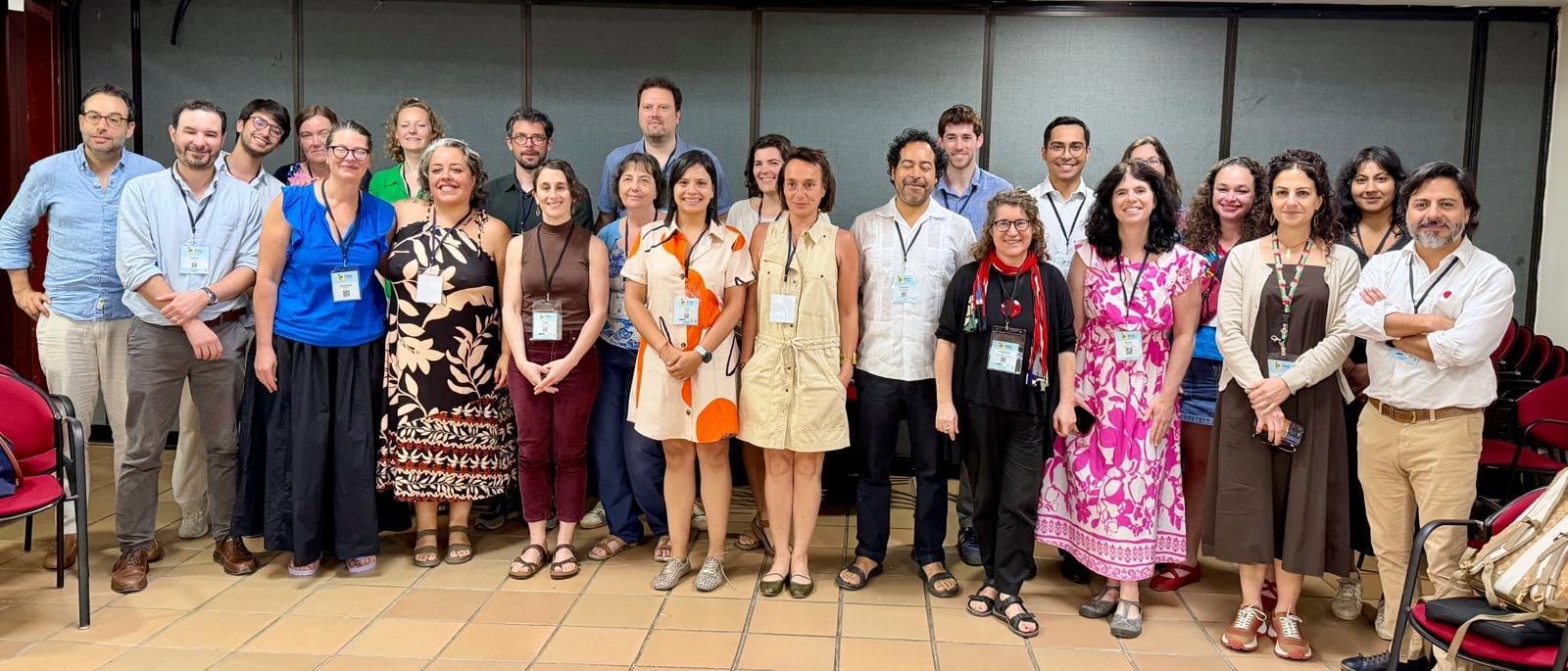
PECC Graduate Fellow Samuel Carvalho attended the First Conference on Transitioning Away from Fossil Fuels ("TAFF"), held on April 24–29th in Santa Marta, Columbia. His summary of the conference examines the growing recognition of Investor-State Dispute Settlement ("ISDS") as a legal barrier to just energy transition and explores how these mechanisms can constrain States' ability to implement climate policies and phase out fossil fuels.
Highlights from PECC Events
Stay informed on PECC's recent initiatives advancing dialogue at the intersection of energy, climate, and environmental law through student-led engagement and cross-institutional collaboration.
- Fossil Fuel Divestment Alliance
- On April 24, 2026, PECC hosted it's inaugural Fossil Fuel Divestment Alliance Event convening students and faculty from multiple universities to discuss institutional investment practices and fossil fuel divestment strategies. The event featured student-led panels, comparative policy discussions, and participation from Columbia, Cornell, Harvard, New York University, Seton Hall, and Yale. Participants examined sustainable investment alternatives and reaffirmed commitments to advancing transparency, divestment, and reinvestment in clean energy solutions across university endowments.
R.E.A.C.T. by PECC Podcast
Newest Episode: Pace Haub Law Scholars On Fossil Fuel Divestment at Pace Law and Pace University
Pace Haub Law Scholars' Frances Gothard, Louis Deforges, Carington Lowe, and Lauren Lynam's discuss a student-led push for fossil fuel divestment at the Elisabeth Haub School of Law and the broader Pace University. This panel covers their advocacy efforts leading up to the event, the importance of aligning university investments with the law school's environmental reputation, lessons from divestment campaigns at other institutions, and the role Pace Law students will continue to play in advancing this movement to divest from fossil fuels forward.
Announcing PECC's newest group of Energy & Climate Law Scholars
The Pace Energy and Climate Center ("PECC") is thrilled to announce the 2025–26 Energy and Climate Law Scholars: Shaleh Al Ghifari, Alexandra Phillips, Maria Sutherland, Alexa Williamson, Danielle Acocella, Louis J. Desforges, Elena Fasullo, Agnes Isabelle, Mick Reilly, Giuliana Salomone, and Emily Patton.
Published in the Pepperdine Law Review, The Tribal Energy Act: A Necessary Step Toward the Electrification of the Navajo Nation, by Carington Lowe and Michael Hamersky, examines barriers to electrification in the Navajo Nation arising from the mismatch between federal land tenure systems and Diné Fundamental Law. It argues that distributed energy systems, particularly biodigesters, provide a viable pathway to expand energy access while supporting tribal self-governance consistent with Diné Fundamental Law.
Recently Submitted Public Comments
- PECC Submitted Comments to the New York State Public Service Commission on Utility-Owned Renewable Generation
- PECC Submitted Comments Opposing a Petition to Suspend or Modify New York's Renewable Energy Program
- PECC Submitted Comments on the Large Load Proceeding Plans
R.E.A.C.T. by PECC Newsletter Curators:
Frances Gothard J.D. '26 | Carington Lowe J.D. '26