
Energy Resilience and the Journey to 100% Renewable Energy on Kodiak Island, Alaska
By: Alexandra Phillips
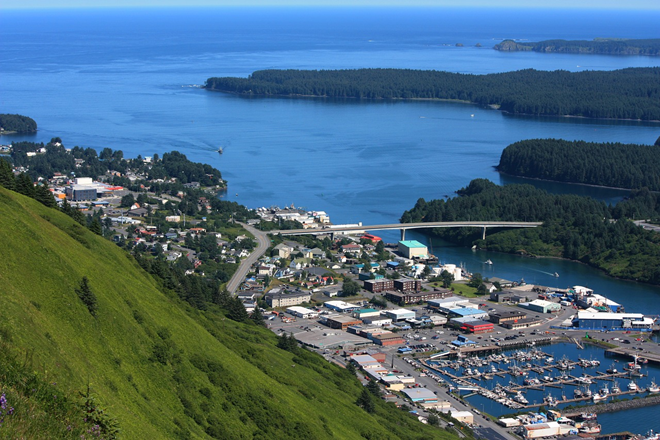
Renewable energy can be an important mitigation tool for small communities. Kodiak Island is a prime example of how local governments can create frameworks to implement 100% renewable energy. The City of Kodiak was established in 1788 following a hurricane and tsunami in Three Saints Bay, which forced inhabitants to relocate to what is now known as Kodiak Island. The foundation of the island has been shaped by resilience and adaptation to natural disasters and climate change.
Because Kodiak Island is located in a remote area, it has become increasingly self-reliant over time and is notably the second-largest island in the United States. Living in a remote area often leads to higher costs due to the transportation required to deliver essential resources such as fuel. In 2002, the Kodiak Electric Association (“KEA”) turned to renewable energy to identify more sustainable and affordable ways to supply electricity to the island. By 2012, the island was operating on 100% renewable energy.
Distributed energy systems are emerging as a key solution to address energy infrastructure needs. These systems can take various forms, including solar, wind, geothermal, and hydropower. They may operate as standalone systems or part of a microgrid that interconnects multiple buildings and homes. Cities across the United States are increasingly using diverse renewable energy sources through distributed systems. Reliance on these systems alleviates the burden some communities face in supplying and supporting their energy needs.
Kodiak Island and KEA recognize the need to upgrade and integrate renewable technologies. KEA evaluated potential wind energy sites and selected Pillar Mountain as the location for a wind-hydropower-diesel system. Geographic considerations are critical when implementing renewable energy sources. Implementing renewable resources, such as hydropower, can present drawbacks, including impacts on wildlife. Much of Kodiak Island is designated as a wildlife refuge; therefore, expanding hydropower would require significant permitting and could have adverse environmental impacts. Instead, the island opted for wind power and achieved its goal of 100% renewable energy by combining it with hydropower. By 2014, the utility microgrid produced more than 99% of its power from wind and hydropower.
The transition to 100% renewable energy has been driven by collaboration between communities and local government to develop more resilient energy frameworks. The Kodiak Island Borough Multi-Jurisdictional Multi-Hazard Mitigation Plan provides a foundation for building a resilient and energy-efficient community. Key strategies include expanding connections to the microgrid to increase capacity and reliability. KEA also designed the system to withstand environmental hazards such as seismic disturbances. From conception to implementation, Kodiak Island demonstrates that microgrids can effectively support communities using renewable energy as their primary energy source.
Since 2009, the island has saved 7,255,345 gallons of diesel and now relies on diesel only as a backup source. Additionally, the Pillar Mountain Wind Farm project has received multiple awards, including the 2009 Wind Cooperative of the Year from the U.S. Department of Energy (“DOE”), as well as recognition from the National Rural Electric Cooperative Association.
Kodiak Island is home to Alaska's largest remote microgrid. The combination of wind and hydropower resources exemplifies how communities can successfully harness renewable energy. This transition stemmed from the growing need to meet increasing electricity demand while maintaining resilience and sustainability.
This article was written by PECC's Energy and Climate Law Scholar Alexandra Phillips, a law student at Elisabeth Haub School of Law at Pace University. It was originally published on February 27, 2026, in Volume 1, Issue 4 of the R.E.A.C.T. by PECC Newsletter.
Editors: Mercè Martí I Exposito, Frances Gothard, Carington Lowe